
Psychologist
Gayathri Krotha
Consultant Clinical Psychologist
3 years of experience
Treats: Depression, Bipolar Disorder, OCD, Autism Spectrum Disorder, Dementia, Personality Disorder, Schizophrenia, SLD
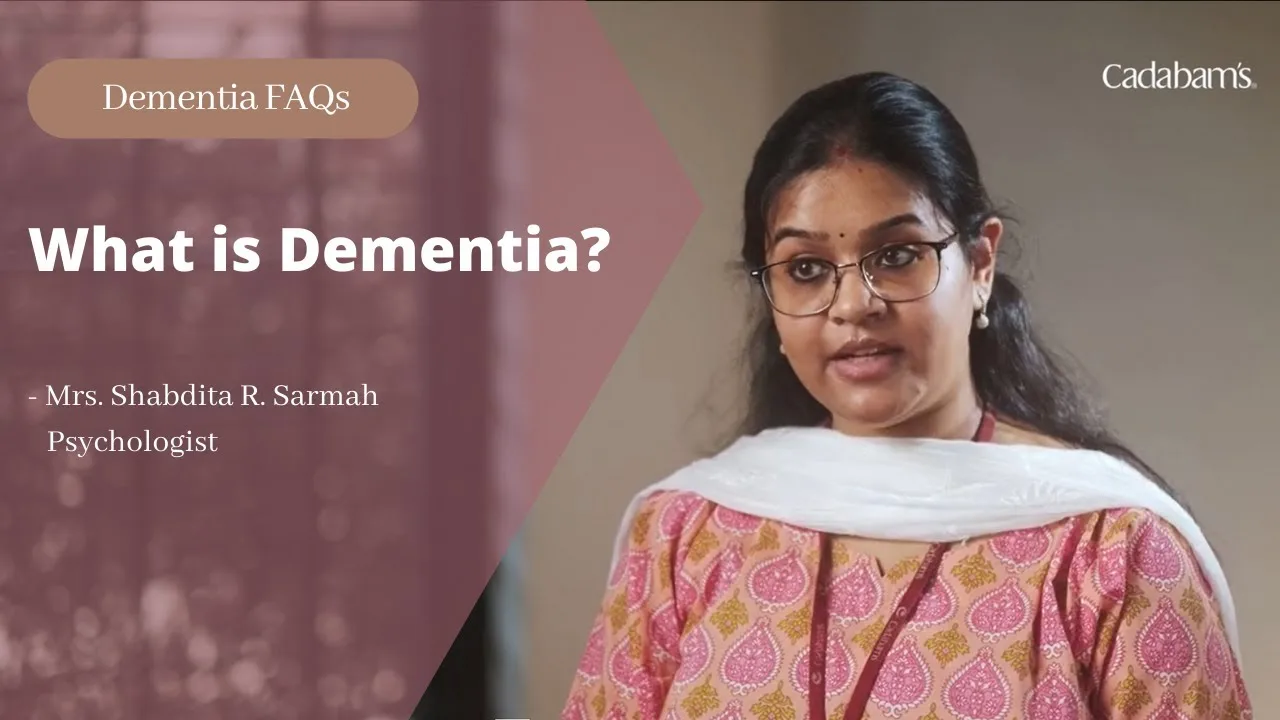
View profileDementia is a progressive condition characterised by a group of symptoms that negatively affect memory, thinking, and social abilities, severely enough to interfere with daily life. It's not a specific disease, but several different diseases can cause dementia. While it's a challenging journey for both individuals and their families, the right psychological support can significantly improve quality of life. If you are seeking expert and compassionate care, Cadabam’s offers specialised services to help manage the cognitive and emotional aspects of dementia. Our team of experienced psychologists provides comprehensive assessments and tailored interventions for individuals and their families.
Good to know
While a definitive medical diagnosis of the underlying cause of dementia (like Alzheimer's disease) is typically made by a neurologist or geriatrician, a psychologist plays a crucial role in the process. Psychologists specialised in dementia are experts in assessing cognitive and behavioural changes.
They use specialised tools to evaluate memory, attention, problem-solving, and language skills. This detailed assessment helps in understanding the extent of cognitive impairment, contributes to the diagnostic picture, and forms the foundation for a comprehensive treatment and management plan. A psychologist focuses on managing symptoms, enhancing cognitive function where possible, and providing ongoing support.

Meet the clinicians
Psychologist
Consultant Clinical Psychologist
3 years of experience
Treats: Depression, Bipolar Disorder, OCD, Autism Spectrum Disorder, Dementia, Personality Disorder, Schizophrenia, SLD
View profile
Psychologist
Clinical Psychologist
3 years of experience
Treats: OCD, Personality Disorder, Depression
View profile
Psychologist
Clinical Psychologist
6 years of experience
Treats: Autism Spectrum Disorder, Bipolar Disorder, Dementia, OCD, Personality Disorder, Schizophrenia, SLD
View profile
Psychologist
Clinical-Psychologist
6 years of experience
Treats: Personality disorder, Bipolar Disorder, Drug Addiction, Alcohol Dependence
View profile
33+ years of focused mental healthcare, shaped by 1000+ real patient journeys.

State of the art mental health centres built for treatment and recovery.

A coordinated team of psychiatrists, psychologists, counsellors, and rehabilitation specialists supporting your care.

Support from early signs through treatment and recovery.

Treatment guided by clear plans that continue beyond diagnosis.

Planned follow ups and continued guidance to help maintain progress over time.
Good to know
An experienced psychologist for dementia is a vital part of the care team. Their role extends beyond assessment to active treatment and support, focusing on improving the well-being of the individual and their family.
Here’s how they help:
Good to know
Seeking a consultation with psychologists for dementia is a critical step when you or a loved one exhibits signs that impact daily life. Early intervention can lead to better management of symptoms. Consider seeking help if you notice:
Good to know
The clinical care by psychologists for dementia begins with a thorough assessment process. This is a comprehensive evaluation designed to understand the specific cognitive, emotional, and behavioural challenges the individual is facing. The assessment typically involves:
Our centres

Long-Term Rehabilitation Center in Bangalore, India
Read more
Advanced Psychiatric Rehab Centre in Bangalore
Read more
Our Affordable Rehab Centre in Bangalore
Read more
Our Specialised De-Addiction Centre in Bangalore
Read more
Premier Mental Health & Rehabilitation Centre in Maldives
Read moreGood to know
After a comprehensive assessment, a psychologist creates a multi-faceted treatment plan. While there is no cure for most progressive dementias, psychological interventions can significantly improve symptoms and quality of life. If you are searching for " psychologists for dementia near me," it's important to know what services to expect.
Psychologists in India do not prescribe medication. However, they work in close collaboration with psychiatrists and neurologists who do. While the psychiatrist manages the medication to help control cognitive and behavioural symptoms, the psychologist focuses on the therapeutic and behavioural aspects of care. This collaborative approach ensures that the individual receives holistic treatment.
A primary goal of psychological treatment is managing the distressing symptoms of dementia. This includes:
Inside our centres
Good to know
Your first consultation is a crucial step towards getting the right support. To reduce any anxiety, here is what you can typically expect:
1. Warm Welcome & Introduction: The psychologist will create a comfortable and confidential environment.
2. Discussion of Concerns: You’ll have the chance to discuss your primary concerns, symptoms, and the reason for your visit.
3. Information Gathering: The psychologist will ask questions about the individual's medical history, symptom timeline, and daily life.
4. Initial Assessment: This may include some brief cognitive screening questions or tasks.
5. Preliminary Plan: The psychologist will discuss their initial thoughts and outline the next steps, which may include further detailed assessment or the start of a treatment plan.
6. Questions & Answers: You will have ample time to ask any questions you may have about dementia, the treatment process, or what to expect moving forward.
Good to know
The frequency of visits to a psychologist depends on several factors, including the stage of dementia, the severity of behavioural and emotional symptoms, and the goals of treatment.
Initially, appointments may be more frequent (e.g., weekly or bi-weekly) to conduct a thorough assessment and establish a strong management plan. As symptoms become more stable and strategies are implemented effectively, the frequency may decrease to monthly or as-needed check-ins for ongoing support and adjustments.
Good to know
The cost of psychological care for dementia can vary. It depends on the type of service required, such as an initial comprehensive assessment, individual therapy sessions, family counselling, or ongoing support. At Cadabam’s, we believe in transparency. We will provide detailed information about the costs associated with your personalized care plan during your initial consultation.
Good to know
At Cadabam’s, we adhere to the strictest ethical standards and prioritise patient confidentiality. All discussions, records, and personal information are kept private. Our psychologists are committed to providing respectful, dignified, and compassionate care, ensuring that both the individual with dementia and their family feel safe and supported throughout their journey.
Podcast & video
FAQs
Voices of recovery
My father was fighting dementia, and it was difficult to manage it at home. We searched for support for him, and we found Cadabam’s. They helped us immensely, they cared for him, and he seems so happy there. Thank you Cadabam’s.
— Mahantesh G
My father started facing severe memory problems. We understood that he was suffering from dementia after a few consultations with a psychiatrist. Rehabilitation at Cadabam’s has helped him so much. He is able to take care of himself and he is able to enjoy life. Thank you Cadabam’s.
— Veeresh A S
I would like to thank Cadabam’s for their care and treatment procedures. My mother was suffering from Dementia, and I was so scared to leave her at a rehabilitation centre. But, I see her so happy now, and she is still so functional. Thank you, thats all I want to say.
— Farah Sharma
My wife of 35 years started forgetting everyday things, and that was when we realized something was amiss. We received a diagnosis of dementia. It felt like the world was falling apart for me. But, the Cadabam’s team have done such a good job of caring for her that I feel so much more peaceful now. I can see her happy, and I know that she is cared for.
— Arvind Subramanian
Watch & learn



Further reading
Helpline at your fingertips
+91 96111 94949