
Psychologist
Radhika Sahal
Clinical Psychologist
3 years of experience
Treats: OCD, Personality Disorder, Depression
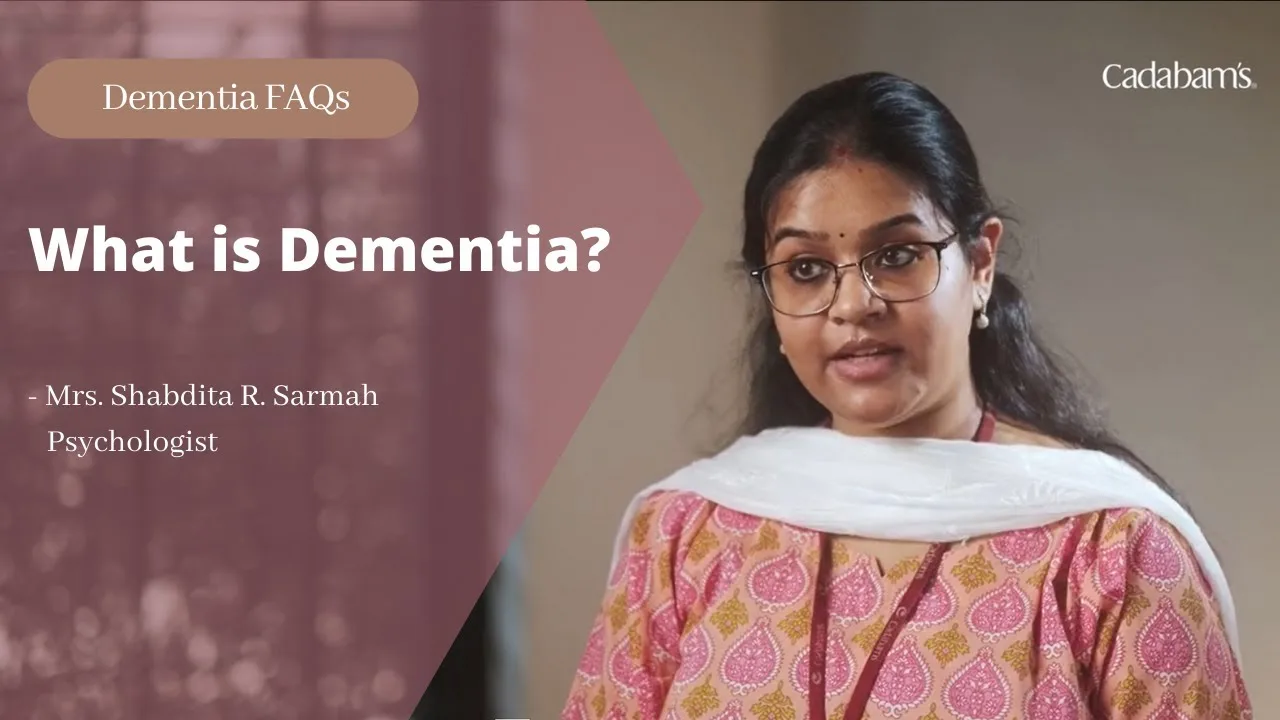
View profileDementia is a progressive neurocognitive condition that affects memory, thinking, behaviour, and the ability to perform everyday activities. It can profoundly impact the lives of individuals and their families. While there is no cure for most types of dementia, professional therapeutic support can significantly improve quality of life, manage symptoms, and provide crucial support for caregivers. This page is designed for individuals and families seeking consultation and clinical care from a therapist for dementia. At Cadabam’s, we have a dedicated team of experienced mental healthcare professionals who provide compassionate and effective care.
Good to know
While the initial diagnosis of dementia is typically made by a neurologist or geriatrician after comprehensive medical evaluation, therapists specialised in dementia play a vital role in the management and treatment process.
A therapist's role focuses on:
Effective management is a collaborative effort, and therapists are a key part of the multidisciplinary care team.

Meet the clinicians
Psychologist
Clinical Psychologist
3 years of experience
Treats: OCD, Personality Disorder, Depression
View profile
Psychologist
Clinical Psychologist
6 years of experience
Treats: Autism Spectrum Disorder, Bipolar Disorder, Dementia, OCD, Personality Disorder, Schizophrenia, SLD
View profile
Psychologist
Clinical-Psychologist
6 years of experience
Treats: Personality disorder, Bipolar Disorder, Drug Addiction, Alcohol Dependence
View profile
Psychiatrist
Consultant Psychiatrist
25 years of experience
Treats: Schizophrenia, Personality Disorder, Bipolar, OCD, Dementia, Autism, Addiction (General), Drug Addiction, Alcohol Addiction
View profile
33+ years of focused mental healthcare, shaped by 1000+ real patient journeys.

State of the art mental health centres built for treatment and recovery.

A coordinated team of psychiatrists, psychologists, counsellors, and rehabilitation specialists supporting your care.

Support from early signs through treatment and recovery.

Treatment guided by clear plans that continue beyond diagnosis.

Planned follow ups and continued guidance to help maintain progress over time.
Good to know
An experienced therapist for dementia provides structured support tailored to the unique needs of the individual. Their primary goal is to enhance well-being, maintain function for as long as possible, and manage challenging symptoms. They help by:
Good to know
The clinical care by therapists for dementia begins with a thorough assessment. This process is designed to understand the full scope of the individual's challenges and strengths. Methods include:
Our centres

Long-Term Rehabilitation Center in Bangalore, India
Read more
Advanced Psychiatric Rehab Centre in Bangalore
Read more
Our Affordable Rehab Centre in Bangalore
Read more
Our Specialised De-Addiction Centre in Bangalore
Read more
Premier Mental Health & Rehabilitation Centre in Maldives
Read moreGood to know
Finding therapists for dementia near me is the first step toward accessing a range of treatment and support options. A therapist will create a multi-faceted plan that may include the following approaches, tailored to the individual’s specific needs and the stage of dementia.
When you connect with dementia therapists near me, the team may include a psychiatrist (a medical doctor specialised in mental health). If so, medication may be considered as part of the treatment plan, especially for managing severe behavioural or psychological symptoms. This can include:
Medication is prescribed and monitored carefully by a psychiatrist at Cadabam’s to ensure safety and effectiveness, always in conjunction with non-pharmacological therapies.
A core part of a therapist's work is managing symptoms and risks without medication. This includes:
Dementia rarely exists in isolation. It is often accompanied by conditions like depression, anxiety, apathy, and sleep disturbances. Therapists are skilled at identifying and treating these co-occurring issues. Addressing them can dramatically improve the individual’s overall comfort, engagement, and quality of life, and can also ease the burden on caregivers.
Good to know
Your first consultation is a safe and confidential space to discuss your concerns. The session typically follows this flow:
1. Discussion of Concerns: You will have the opportunity to share your reasons for seeking help and describe the challenges you are facing.
2. Information Gathering: The therapist will ask questions about the symptoms, medical history, and current situation.
3. Initial Assessment: A preliminary evaluation of cognitive and emotional state will be conducted.
4. Treatment Planning: The therapist will discuss potential treatment options and outline the next steps.
5. Questions & Answers: You can ask any questions about the process, confidentiality, and what to expect moving forward.
Inside our centres
Good to know
The frequency of visits to a therapist for dementia depends entirely on individual needs.
The care plan is flexible and will be adjusted based on progress and changing needs.
Good to know
The cost of consulting a therapist can vary depending on several factors, including the type of consultation (initial vs. follow-up), the duration of the session, and the complexity of the care required. At Cadabam’s, we are committed to transparency. We will provide you with a clear understanding of the costs involved before beginning treatment.
Good to know
At Cadabam’s, we uphold the highest standards of privacy and ethical care. All therapists treating dementia are bound by strict confidentiality agreements. Your personal information and everything discussed during sessions are protected. We are dedicated to providing a respectful, non-judgemental, and safe environment where patients and their families feel heard, valued, and supported throughout their journey.
Taking the first step is crucial. If you or a loved one is struggling with the challenges of dementia, don't wait to seek help. Professional support can make a significant difference. Schedule a consultation with one of our expert therapists to get a personalised assessment and care plan.
Contact Cadabam’s today to book your appointment. Call us at +91 9611194949 .
Podcast & video
FAQs
Voices of recovery
My father was fighting dementia, and it was difficult to manage it at home. We searched for support for him, and we found Cadabam’s. They helped us immensely, they cared for him, and he seems so happy there. Thank you Cadabam’s.
— Mahantesh G
My father started facing severe memory problems. We understood that he was suffering from dementia after a few consultations with a psychiatrist. Rehabilitation at Cadabam’s has helped him so much. He is able to take care of himself and he is able to enjoy life. Thank you Cadabam’s.
— Veeresh A S
I would like to thank Cadabam’s for their care and treatment procedures. My mother was suffering from Dementia, and I was so scared to leave her at a rehabilitation centre. But, I see her so happy now, and she is still so functional. Thank you, thats all I want to say.
— Farah Sharma
My wife of 35 years started forgetting everyday things, and that was when we realized something was amiss. We received a diagnosis of dementia. It felt like the world was falling apart for me. But, the Cadabam’s team have done such a good job of caring for her that I feel so much more peaceful now. I can see her happy, and I know that she is cared for.
— Arvind Subramanian
Watch & learn




Further reading
Helpline at your fingertips
+91 96111 94949