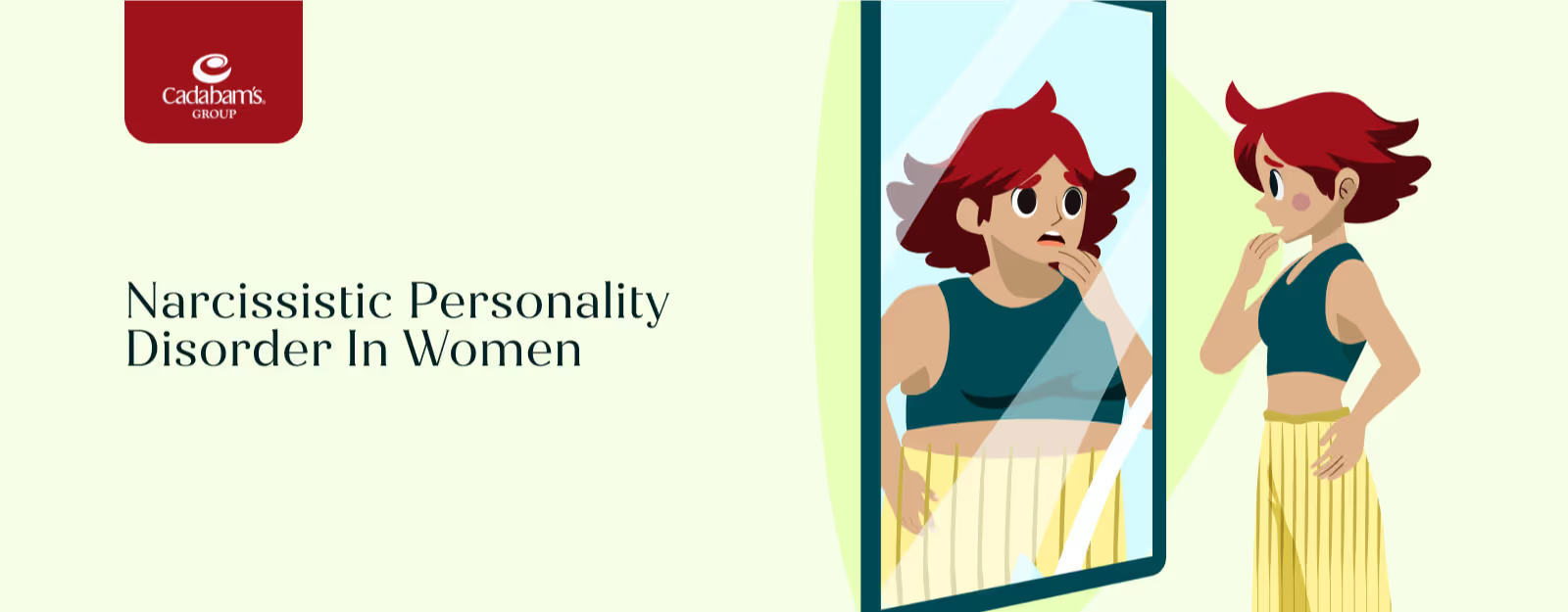

The story of Narcissus gave rise to the term “ Narcissism” and in extension Narcissistic Personality Disorder- a fixation one has with their physical appearance and public perception.
Narcissus was a hunter in Greek Mythology, he was blessed with features so exquisite that even gods would envy him. One day while he was hunting in the forest he came across a pond and decided to quench his thirst, as he bent to sip the water he saw himself for the first time and was overwhelmed by his own beauty. Time passed and his thirst grew stronger but he just sat there staring at himself slowly falling in love with his own reflection. In the end, Narcissus just sat there till he passed away and turned into a golden flower by the pond.
What does Narcissistic Personality Disorder look like?
Narcissistic Personality Disorder stems from the idea of the myth of Narcissus, it falls under the second cluster of personality disorders and is characterised by a person having an inflated self-image where they believe that they are superior to others. People with this disorder are seen to be generally unhappy and disappointed when they aren’t given praise and appreciation for small tasks that they think were important. Today the term ‘narcissistic’ is thrown in conversation casually and is often used to describe someone who admires themselves and their work. However, Narcissistic Personality Disorder is more than just high self-esteem.
What are the Identifying Traits of Narcissistic Behaviour?
Narcissistic Personality Disorder (NPD) and its symptoms usually appear in late adolescence and early adulthood. Young adults with narcissistic personality disorder traits are generally preoccupied with three major things- power, success and beauty. These three factors are subtle vulnerabilities that manifest themselves as deviant behavioural traits. Thus people with NPD are seen as arrogant, demanding and snobbish. They form a habit to boast about their accomplishments and demerit the success of others. People with NPD are also seen to have regular problems in school, the workspace and with their relationships both romantic and familial. While such deviancy in behaviour might be visible to someone who is spending time with the person, they might not be able to identify it themselves.
Are there Different Types of Narcissistic Personality Disorder?
Each person has a unique way of responding to a stimulus and hence a unique personality type, in many ways this uniqueness can be grouped in categories in terms of their similarity and differences. While narcissist personality disorder is a part of cluster B personality disorders, it can be further divided in three broad categories for a better understanding.
Different types of Narcissistic Personality Disorder include-
Grandiose: The dominant identifying trait of this is a person with a sense of grandiosity, with this comes poor interpersonal and psychosocial functioning and a higher vulnerability to show symptoms of other mental illnesses and develop a pattern of substance abuse.
Fragile: This type is identified due to its comorbidity with Depressive and Anxiety disorders. People with Fragile NPD show a rampant fluctuation between high and low self-esteem and are regarded to have a lack of empathy.
Exhibitionist: The dominant feature of this type is most likely to appear as a behavioural trait when the person expects immediate failure. People with Exhibitionist NPD exaggerate their successes and have a tendency to gain attention through sexual behaviour and advances.
While Narcissistic Personality Disorder can be broadly divided into these categories, further division is often overlooked due to the stigma it attaches to the person.
How Does One Develop a Narcissistic Personality?
The behavioural changes that lead to a narcissistic personality are often noticed in late adolescence but its development begins in the childhood years. Research in the field of Personality Disorders has linked genetic vulnerability and nurturing environment as a causal factor. NPD is higher in teens and young adults with unstable childhoods and emotional neglect on the hands of the people raising them. Losing a parent, sexual and physical abuse, physical trauma and abandonment are strong triggers for a child. Such environmental factors paired with a genetic predisposition for temperament is the leading cause of NPD.
Living with Narcissistic Personality Disorder
It is less likely for someone with narcissistic personality disorder to identify their own traits and come forward for help, to their minds what they are thinking and doing is always correct. This however directly affects the people they have active relationships with. While the relationship may be romantic, platonic or work-based a person with narcissist personality disorder will always put themselves and their need prior to the others, they will show a tendency to surround themselves in fantasies related to their superiority and distance themselves when put in a situation where they aren’t dominant.
Free · Confidential
Book screening with our triage team
Speak to a clinician in minutes. We’ll help you figure out the right next step.
Can someone with Narcissistic Personality Disorder love?
Narcissists aren’t driven in romantic relationships by passion but by the attention and admiration, they receive from their partner. Their relationship is mostly lucid love, where they find this to be a game and attention and affection to be a desirable prize. This also leads to sexual infidelity and promiscuity. Narcissists prioritise power over intimacy and maintain their relationships till it feeds their desired level of ego.
A person in a relationship with someone with NPD will always feel starved for affection and intimacy, they will constantly crave expressions of love and will watch the other rationalise their deviant behaviour as a token of their appreciation. If you feel like you are living with a narcissist or are actively involved with one, seeking the help of a professional can help you understand how to modify your responses for a healthier interaction in the future.
If you or anyone you know is suffering from these symptoms, kindly reach out to us. Our expert team of mental health professional are available to help you 24X7 at +91 9741476476 or you can email us at info@cadabams.org