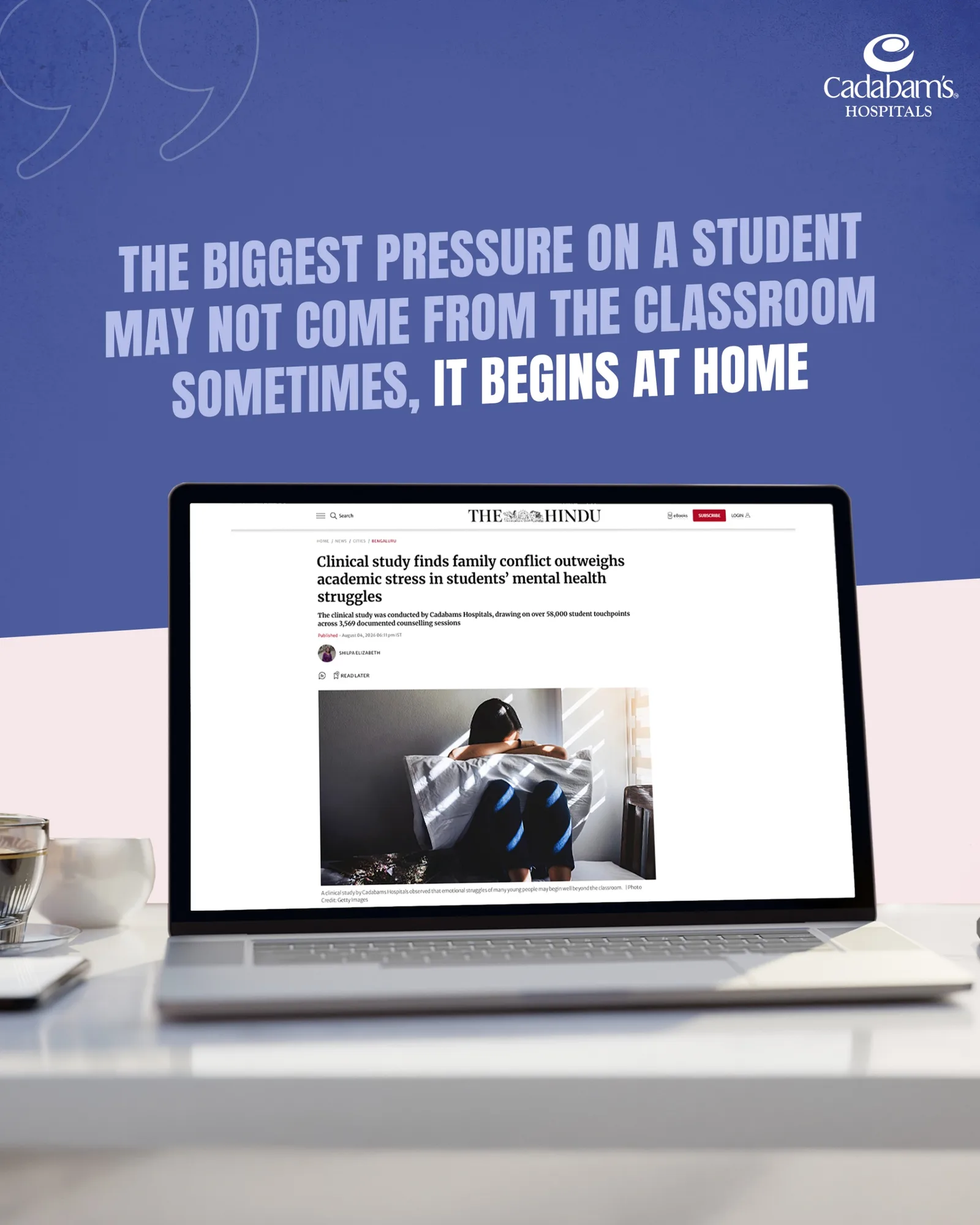
For most families, the conversation about how a student is doing begins and ends with marks. A clinical study by Cadabam's Hospitals, featured in The Hindu, suggests that may be the wrong question.
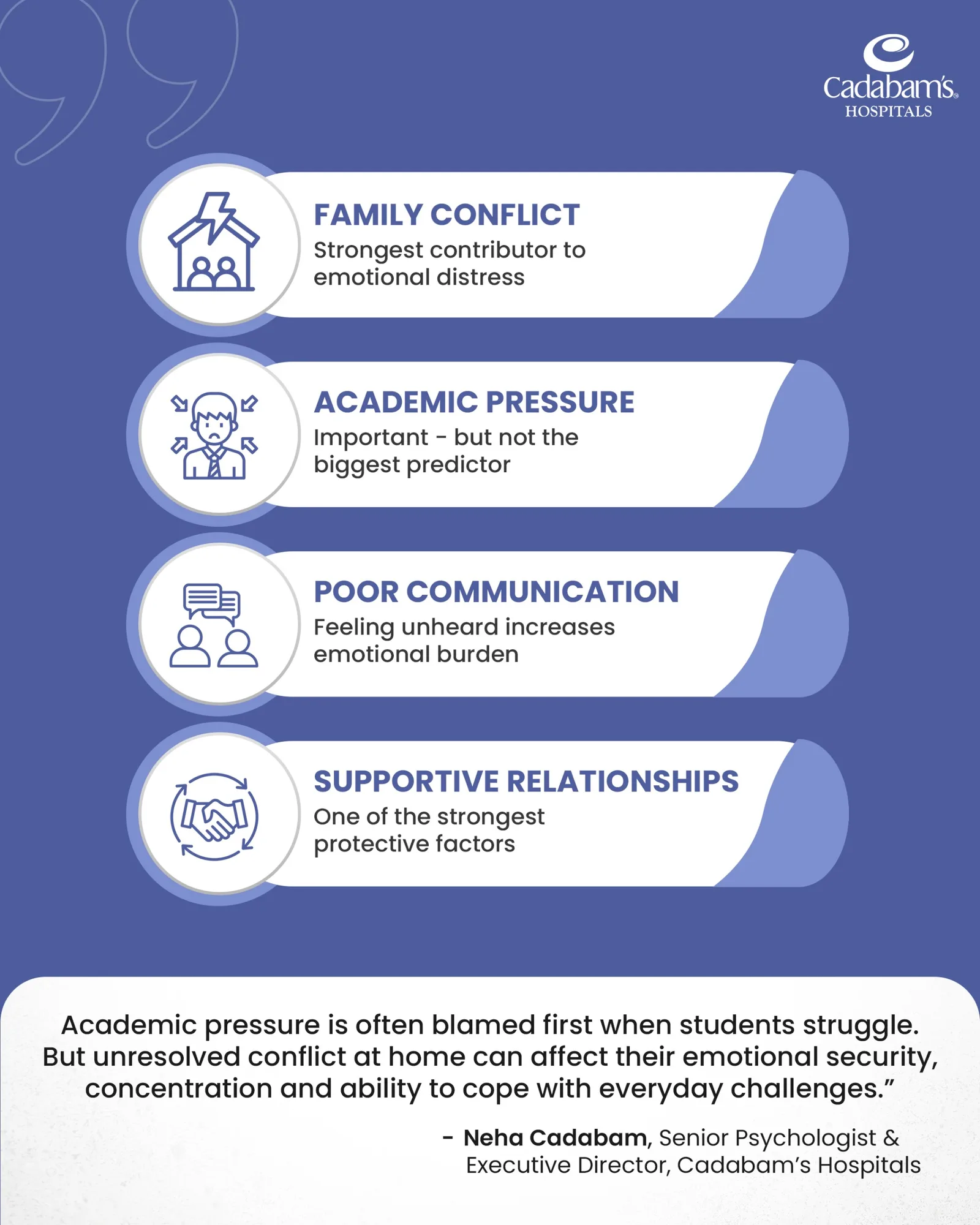
The study draws on more than 58,000 student touchpoints across 3,569 documented counselling sessions, conducted by Cadabam's psychologists working inside more than 20 schools and colleges, with close to 92% of those touchpoints from Bengaluru. Its central finding: family conflict was a more common reason for students to seek psychological support than academic stress. Anxiety accounted for the largest share of counselling concerns at 29%, but family conflict (14%) ranked ahead of academic stress (10%), followed by relationship distress (8%) and loneliness (7%).
Speaking to The Hindu, Neha Cadabam, Senior Psychologist & Executive Director, Cadabam's Hospitals, said: “One of the biggest challenges is that many students continue to suffer silently due to lack of conducive environment for discussing what they are experiencing at home. If we truly want to improve student mental health, we need to move beyond conversations around examinations and create emotionally safe environments where young people feel heard without fear of judgement.”
The picture also shifted by stream. Engineering students most often sought help for relationship distress and ADHD-related concerns, and referred themselves more readily than any other group. Medical students carried the combined weight of academics and clinical duties; management and architecture students spoke of loneliness, homesickness and career uncertainty; law students showed the highest density of high-risk cases. Students aged 16 to 18 in Pre-University colleges recorded the highest proportion of self-harm concerns among the groups assessed — a finding that asks for steady attention through a demanding year, and for adults willing to ask directly and listen without panic.
None of this makes academic pressure unimportant; it widens the frame. A young person who feels secure at home tends to cope better with everything outside it, and supportive relationships emerged as one of the strongest protective factors in the study.
For parents, schools and colleges, the shift is small but real: ask about the day, not only the result, and treat “I’m fine” as the beginning of a conversation rather than the end of one.
If a student in your family is struggling, reaching out early makes a real difference. Cadabam's offers counselling and psychiatric support for adolescents, students and families, in person and online — talk to our team on +91 96111 94949.