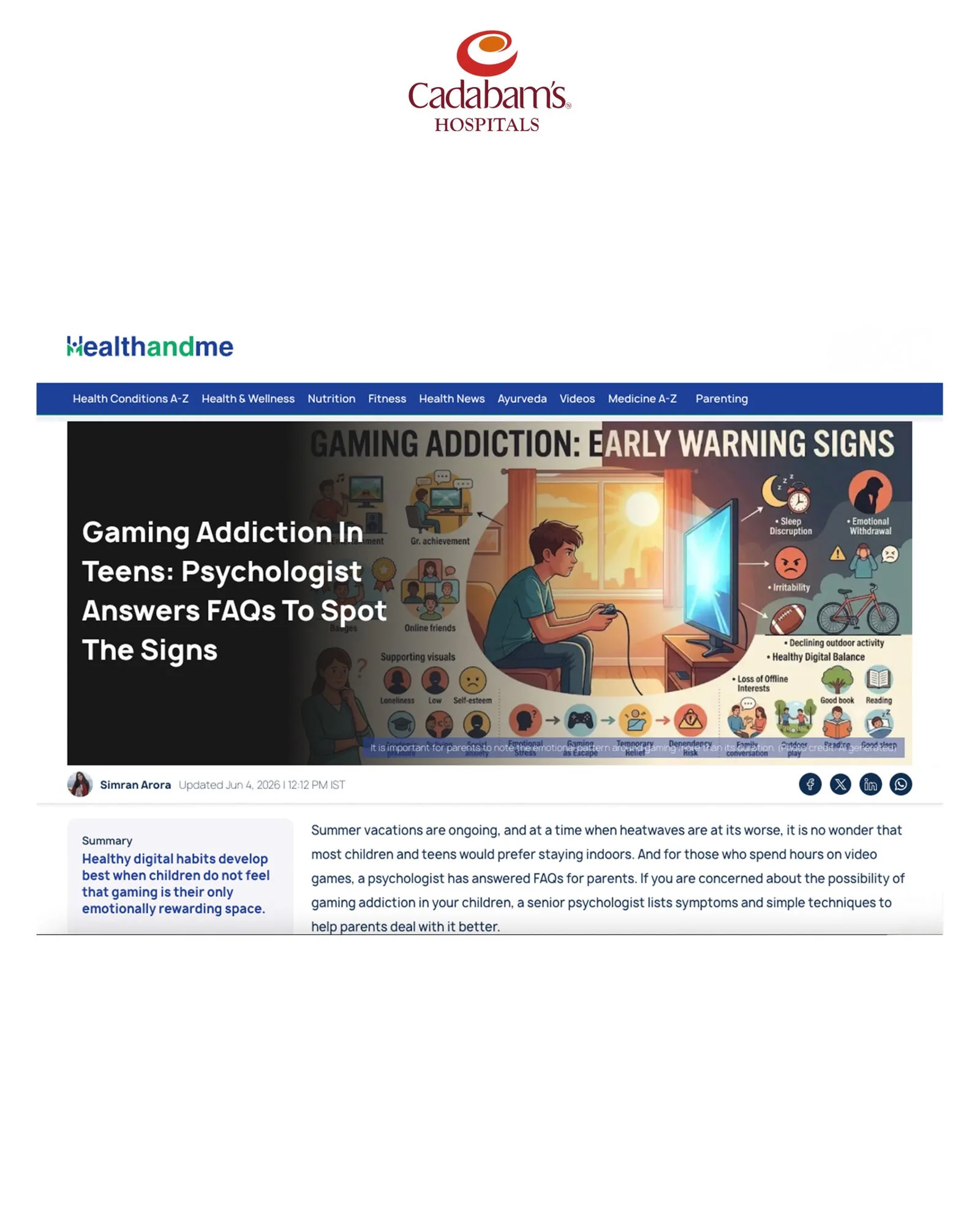
Summer vacations bring longer days indoors — and for many families, rising concern about how much time children are spending on video games. But the real question isn't how many hours. It's what those hours are doing emotionally.
Neha Cadabam, Senior Psychologist and Executive Director at Cadabam’s Hospitals, was featured in Health and Me to answer the FAQs parents are genuinely asking about gaming addiction in children and teens.
Her key insight: gaming becomes a problem not when it is frequent, but when it becomes the primary way a child manages emotions, escapes difficult feelings, or derives a sense of worth. Loneliness, social anxiety, academic pressure, low self-esteem, and family conflict are among the underlying struggles that can quietly drive excessive gaming — long before the behaviour becomes visible.
What makes this especially difficult for families is that many affected children continue to perform normally in school and daily life. The distress hides behind functioning.
Cadabam advises parents to look beyond screen time limits and focus on emotional patterns — how a child behaves offline, how they handle stress, and whether digital spaces have become their only place of comfort.
Cadabam’s Hospitals offers integrated mental health support for children, teens, and families navigating gaming and behavioural concerns. To speak with a specialist, reach out to us today.