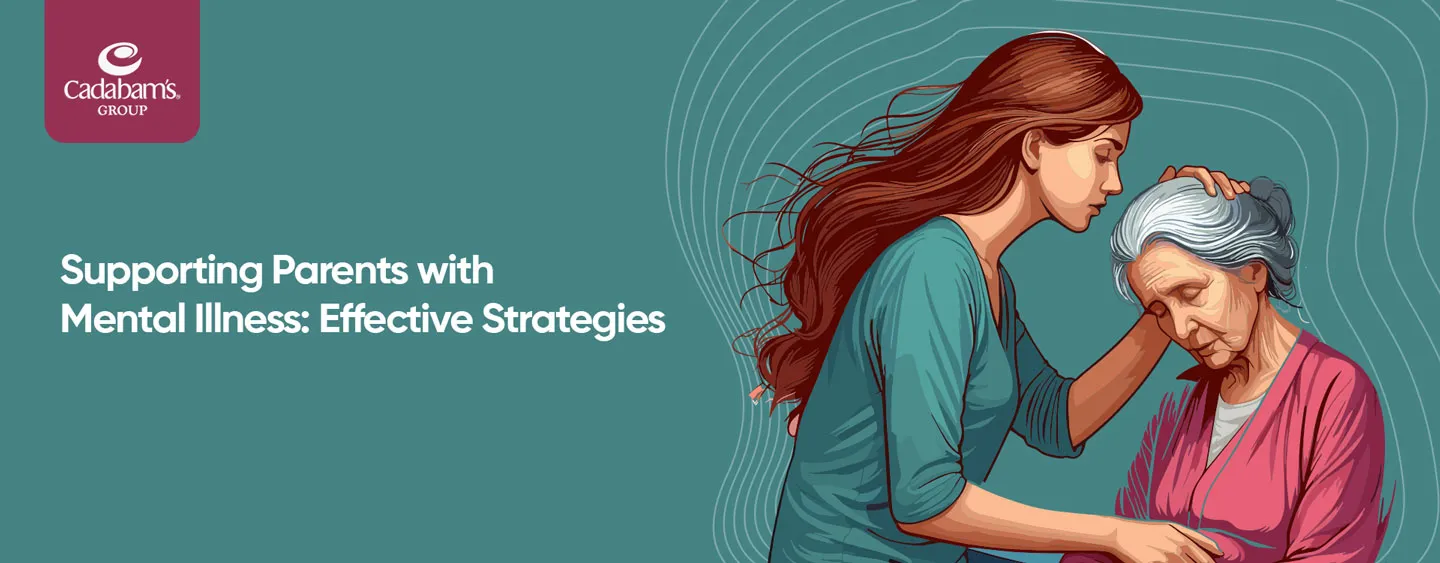
Caregiver burnout is the clinical state of physical, emotional, and mental exhaustion that develops in family members supporting a loved one with a long-term mental health condition, addiction, or chronic illness. It is not weakness, selfishness, or a failure of love. It is a recognised clinical pattern, and it is treatable. This guide is for the family member doing the caring — and for the family members who need to start noticing when their loved one's primary caregiver is the one in trouble.
In every clinical family session we conduct at Cadabam’s, one of the three or four people in the room is showing early signs of burnout. Sometimes it is the patient's mother. Sometimes the spouse. Sometimes the adult sibling who took on the coordinator role without anyone asking. The patient gets clinical attention because they are the named patient. The caregiver gets none — and quietly slides toward a worse outcome than the patient they are caring for.
This piece is the conversation we wish every family had earlier.
What caregiver burnout is — clinically
Caregiver burnout is a chronic stress response to the prolonged demand of caring for a person with a serious illness. It develops slowly — usually over months or years — and is characterised by a triad:
- Physical exhaustion — disrupted sleep, weight changes, frequent minor illness, body pain
- Emotional exhaustion — irritability, detachment, loss of pleasure in things that used to feel good, low mood, anxiety
- Cognitive exhaustion — difficulty concentrating, memory lapses, decision fatigue, reduced capacity to plan
It is closely related to two other terms families and clinicians use interchangeably but which mean slightly different things:
| Term | What it means | Severity |
|---|---|---|
| Caregiver stress | Acute strain in response to a specific event or period | Recoverable with short rest |
| Caregiver burden | Sustained, recognised difficulty (objective and subjective) of caring for someone with chronic illness — measurable on instruments like the Zarit Burden Interview | Manageable with support |
| Caregiver burnout | Chronic, multi-system exhaustion that has crossed into clinical territory | Requires active intervention |
If you recognise yourself or someone in your family in the third row, you are not overreacting. You are describing a clinical state. It has treatments, and it can resolve.
Why caregiver burnout is under-recognised in India
Three things make this condition particularly hidden in Indian family contexts.
Caregiving is framed as love, not labour. In most Indian households, looking after a family member with a serious illness is considered a basic family responsibility — not a job, not a burden, not something that requires acknowledgement. Naming the strain feels like a betrayal of the relationship.
Caregivers are usually women. Wives, mothers, daughters, daughters-in-law. The cultural expectation that women care silently makes it harder for women caregivers to name their own exhaustion — and easier for the rest of the family to fail to notice.
Mental health caregiving is invisible work. Unlike physical caregiving — which has visible activities like bathing, lifting, medication administration — mental health caregiving is largely emotional regulation, communication management, crisis anticipation, and atmosphere maintenance. None of it looks like work from the outside. All of it is exhausting.
The result: many Indian caregivers are several years into burnout before anyone — including themselves — recognises that something is wrong.
10 signs of caregiver burnout
If three or more of these have held for a month or longer, it is worth a clinical conversation.
- Sleep is disrupted — trouble falling asleep, frequent waking, exhaustion on waking even after enough hours
- You feel emotionally numb rather than sad or angry — a kind of detachment from feelings that used to be available
- Small irritations become large — the patient, other family members, colleagues, strangers all feel disproportionately frustrating
- You have stopped doing things you used to enjoy — hobbies, exercise, social contact, religious practice
- You are losing track of basic appointments of your own — your own health checks, work commitments, friendships
- You are eating differently — less, more, irregularly, comfort food, skipped meals
- You feel resentful of the patient and then immediately guilty about feeling resentful
- You feel resentful of other family members for not helping enough
- You are using substances differently — alcohol, sleeping pills, painkillers, tobacco — to manage day to day
- You have thoughts that "everyone would be better off without me having to handle this" — even fleetingly, even rejected the moment they appear
That last sign is significant. If it is present — alongside the rest of the picture — please call our 24/7 helpline today: +91 96111 94949.
How caregiver burnout affects the patient
This matters: caregiver burnout is not just a problem for the caregiver. It is a clinical problem for the patient too.
Burned-out caregivers are more critical in their communication, more impatient with recovery setbacks, less able to provide the calm scaffolding the patient needs in early recovery, and more likely to push for too much too fast on good days while withdrawing too far on bad days. The patient registers all of this — and recovery slows. (For the underlying mindset shift that makes this kind of patience sustainable, see our companion guide on the family mindset that makes recovery possible. And for the clinical picture of why the patient can't simply "try harder," see our piece on avolition.)
The single highest-leverage clinical move available to many Indian families is not a new medication, a new therapy, or a new specialist. It is supporting the caregiver well enough that they can show up consistently for the patient.
The Cadabam’s model — caregiver support as part of the treatment
"Psychosocial rehabilitation is not only rehab for the client. It is also rehabilitation for the family. It provides parents, caregivers, family members with the knowledge, support, hope and much-needed respite."
— Cadabam’s clinical team
At Cadabam’s, family support is treated as a core part of the clinical work, not an add-on. The support layer for caregivers includes:
1. Family psychoeducation
Through the Family Psycho-Education Support Group (FPSG) at Cadabam’s Amitha — running monthly. Sessions focus on understanding the loved one's condition, the recovery framework, and the communication principles that make family support sustainable.
2. Individual family therapy
Sessions for the family members alone — separate from the patient — where caregivers can process exhaustion, guilt, anger, and grief without performing strength. Available through Cadabam’s Hospitals across JP Nagar, Whitefield, and Spark Mysore.
3. Respite care
The most under-utilised of the family-support offerings. Residential respite at Cadabam’s Amitha allows families to take a planned break of a few days to two weeks — during which the patient receives continued structured care and the caregiver gets to rest, sleep, and reconnect with their own life. Respite is a clinical intervention, not a luxury.
4. Skill-building family workshops
How to handle medication conversations, how to set up a post-discharge routine, how to manage relapse warning signs, how to communicate without escalating. Practical, repeatable, low on jargon.
5. Cross-referral to outpatient mental health support for the caregiver
If the caregiver is showing depression, anxiety, sleep disorder, or post-traumatic stress in their own right — common in long-term caregiver burnout — referral to outpatient psychiatric or psychological care at Cadabam’s Hospitals (JP Nagar / Whitefield / Spark Mysore) is straightforward.
Five things caregivers can start doing this week
Before clinical help is in place — or alongside it — these are the smallest, lowest-friction starting points.
- Protect one hour a day that is yours. Walk. Read. Watch something. Sit on the balcony. The hour does not need to be productive. It needs to be uninterrupted.
- Stop performing strength when you are not feeling strong. Saying "I am tired" to another family member is not a betrayal of the patient. It is information that the household needs.
- Talk to one other person each week who is not a family member and not a clinician. A friend, a former colleague, a neighbour. Talk about anything — not necessarily the situation. Connection is the resource.
- Notice what you are not eating, drinking, or sleeping — and pick one to address. Small body interventions outperform large mood interventions in early caregiver burnout.
- Ask for help by name. Not "can someone help." Specifically: "Could you take Saturday morning?" / "Could you come with me to the appointment on Tuesday?" / "Could you handle the family WhatsApp group for the next two weeks?" Vague requests for help get vague responses. Specific requests get answered. For the broader communication framework, see our guide on how to help someone with depression.
A note for families of caregivers
If you are reading this because you suspect your sister, your mother, your wife, your brother, or another family member is the caregiver in your family — and that they may be burning out — there are three things you can do this week.
- Name it to them, gently and side-by-side. "I have been thinking about how much you have been carrying. I want to help. Can we talk about how?"
- Offer something specific, not vague. Take over one task. Take a single Saturday. Drive them to one appointment. Specific offers get accepted; vague ones get politely declined.
- Encourage them to seek clinical support for themselves. They will resist this — caregivers are usually the last to seek help. The Cadabam’s 24/7 helpline (+91 96111 94949) can take a first call from a family member of the caregiver, not just the patient.
When to seek clinical help — for the caregiver
Call our 24/7 helpline if any of the following are present:
- Three or more signs of caregiver burnout from the list above have held for a month or longer
- The caregiver has reduced their own basic self-care (sleep, food, medical care, social contact) for several months
- The caregiver is using substances (alcohol, sedatives, painkillers, tobacco) in ways they would not have, before they took on the caregiving role
- The caregiver is expressing fleeting thoughts of escape, harm, or wishing not to be here
- The caregiver-patient relationship has deteriorated to the point where conversations consistently escalate
- The household feels held together only by the caregiver, and that thread is fraying
24/7 helpline: +91 96111 94949
Walk-in consultations and respite-care admissions are available at Cadabam’s Amitha (residential psychosocial rehabilitation and family respite) and across the Cadabam’s Hospitals network (JP Nagar, Whitefield, Spark Mysore — outpatient family therapy and crisis support). For addiction-recovery contexts, see Cadabam’s Anunitha and the first 90 days after rehab framework.
Free · Confidential
Book screening with our triage team
Speak to a clinician in minutes. We’ll help you figure out the right next step.