By the Cadabams Clinical Team · Published 2026-09-08 · ~7 min read
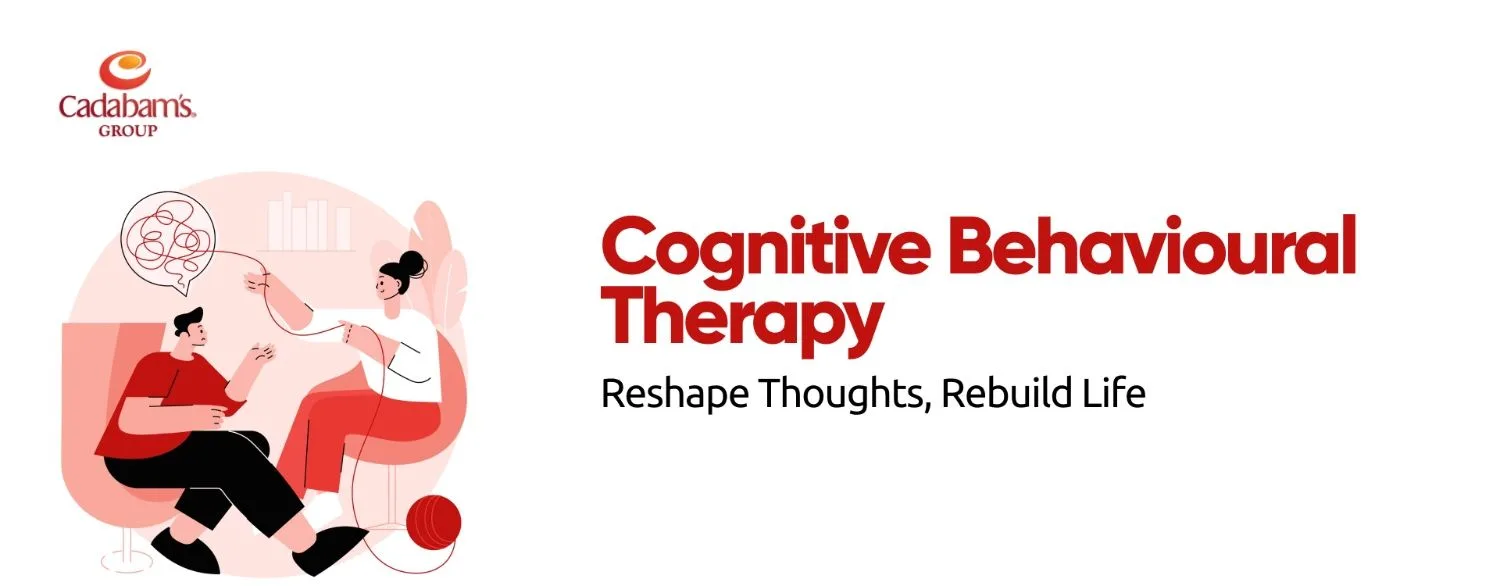
Cognitive Behavioral Therapy (CBT) for anxiety is a structured, evidence-based psychological treatment that helps individuals identify and challenge distorted thought patterns while gradually reducing fear-driven avoidance behaviors. By breaking the cycle of catastrophic thinking and physical tension, CBT equips individuals with practical, lifelong tools to regain control over anxiety. It remains the gold standard psychotherapeutic intervention recommended by international and Indian clinical guidelines.
Worried about this? Speak to a Cadabams professional, or call our 24/7 helpline: +91 96111 94949.
What Is CBT and Why Is It Used for Anxiety?
Cognitive Behavioral Therapy (CBT) is grounded in a simple yet profound premise: our thoughts, feelings, and behaviors are constantly interacting. When anxiety takes hold, it creates a self-reinforcing loop where exaggerated threat perception drives distress and leads to safety or avoidance behaviors.
┌────────────────────────────────────────────────────────┐
│                   THE ANXIETY CYCLE                   │
│                                                        │
│   ┌────────────────┐          ┌──────────────────┐    │
│   │ Anxious Thought├─────────►│ Physical & Emotional│    │
│   │("What if I fail")          │  Anxiety/Panic   │    │
│   └───────▲────────┘          └────────┬─────────┘    │
│           │                            │              │
│           │                            ▼              │
│   ┌───────┴────────┐          ┌──────────────────┐    │
│   │  Reinforced    │          │Avoidance / Safety│    │
│   │  Fear Response ◄──────────┤    Behavior      │    │
│   └────────────────┘          └──────────────────┘    │
└────────────────────────────────────────────────────────┘
In the anxiety cycle, an intrusive or catastrophic thought triggers a physiological stress response—such as racing heart, shortness of breath, or muscle tension. To cope, an individual might leave the situation, seek constant reassurance, or avoid similar triggers altogether. While avoidance offers immediate, temporary relief, it inadvertently confirms to the brain that the situation was dangerous, causing anxiety to grow stronger over time.
CBT targets both sides of this equation. It provides cognitive behavioral therapy for anxiety by teaching individuals to evaluate the accuracy of their thoughts (cognitive work) while systematically confronting feared scenarios without relying on avoidance (behavioral work). Extensive scientific research, including meta-analyses evaluating psychotherapy outcomes, shows large treatment effect sizes of approximately 0.9 for anxiety disorders. This solidifies CBT as one of the most reliable anxiety treatments available in clinical practice today.
Which Anxiety Disorders Does CBT Treat?
Anxiety presents differently across individuals, ranging from pervasive daily worry to acute, terrifying panic attacks. CBT protocols are tailored to address the unique mechanisms maintaining specific anxiety conditions:
- Generalized Anxiety Disorder (GAD): Focuses on managing excessive, uncontrollable worry. Key techniques include worry postponement, distinguishing between solvable and unsolvable problems, and challenging beliefs about the usefulness of worrying.
- Social Anxiety Disorder: Addresses intense fears of negative judgment, embarrassment, or scrutiny in public or professional settings. Therapists utilize behavioral experiments, attention-training exercises, and structured role-playing.
- Panic Disorder: Targets the fear of bodily sensations themselves (such as a pounding heart or dizziness). Treatments incorporate interoceptive exposure—safely inducing mild physical sensations in a controlled environment—to break the association between bodily symptoms and impending catastrophe.
- Specific Phobias: Uses graduated, step-by-step exposure hierarchies to help individuals overcome irrational fears of specific objects or situations (e.g., flying, heights, or needles).
- Health Anxiety (Hypochondriasis): Helps individuals reduce body checking, internet symptom searches, and reassurance-seeking while learning to reframe normal physiological variations.
- Obsessive-Compulsive Disorder (OCD): Employs a specialized variant of CBT known as Exposure and Response Prevention (ERP), which helps patients face obsessive triggers without engaging in compulsive rituals.
CBT Techniques for Anxiety: The Core Tools
During CBT sessions for anxiety, clinical psychologists introduce specific, practical tools that patients practice both in session and in their day-to-day lives.
┌────────────────────────────────────────────────────────────────────────┐
│                      CORE CBT TOOLS FOR ANXIETY                        │
├─────────────────────────┬──────────────────────────────────────────────┤
│ CBT Technique           │ Primary Mechanism & Goal                     │
├─────────────────────────┼──────────────────────────────────────────────┤
│ Cognitive Restructuring │ Identifies cognitive distortions, tests      │
│                         │ evidence, and builds balanced perspectives.  │
├─────────────────────────┼──────────────────────────────────────────────┤
│ Exposure & Response     │ Gradually faces feared triggers without      │
│ Prevention (ERP)        │ resorting to safety or avoidance behaviors. │
├─────────────────────────┼──────────────────────────────────────────────┤
│ Behavioral Experiments  │ Directly tests anxious predictions in real-  │
│                         │ world scenarios to update fear beliefs.      │
├─────────────────────────┼──────────────────────────────────────────────┤
│ Relaxation & Breathing  │ Regulates physiological hyperarousal to      │
│ Retraining              │ support active cognitive & behavioral work.  │
└─────────────────────────┴──────────────────────────────────────────────┘
- Cognitive Restructuring: This process involves tracking automatic negative thoughts, identifying cognitive distortions (such as catastrophizing or mind-reading), and examining the objective evidence for and against those thoughts. The objective is not ungrounded "positive thinking," but developing realistic, balanced assessments.
- Exposure and Response Prevention (ERP): Considered the cornerstone of behavioral anxiety treatment, ERP involves creating an "anxiety ladder" or hierarchy of feared situations. Patients gradually confront these items, starting with mild triggers and working up to challenging ones, while refraining from safety behaviors. This facilitates habituation—the brain's natural process of learning that the feared outcome is unlikely or manageable.
- Behavioral Experiments: Rather than just discussing a fear hypothetically, therapist and patient design real-world experiments to test anxious predictions. For instance, a person who fears stumbling over words might deliberately pause during a conversation to observe whether peers react negatively.
- Relaxation and Breathing Retraining: Somatic management tools like diaphragmatic breathing and progressive muscle relaxation help lower physiological hyperarousal. These techniques serve as coping tools to help individuals stay grounded while engaging in exposure work, rather than tools to escape feeling anxious.
What Happens in CBT Sessions for Anxiety?
A standard course of CBT for anxiety typically involves 12 to 16 weekly sessions, lasting approximately 3 to 4 months, though the exact duration depends on individual complexity and goals.
Each 45- to 50-minute session follows a structured format:
- Brief Mood Check-In: Reviewing overall anxiety levels and significant events from the past week.
- Homework Review: Analyzing the real-world practice tasks assigned during the previous session.
- Core Skill Building: Introducing a new cognitive or behavioral concept, modeling its application, and practicing it in the session.
- Homework Assignment: Collaboratively setting practical, specific tasks to complete before the next appointment.
Treatment Phases
During the initial sessions (Sessions 1–3), the therapist conducts a comprehensive clinical assessment, provides psychoeducation on how anxiety operates in the brain and body, and collaboratively mapping out the patient's individual anxiety model.
In the middle sessions (Sessions 4–12), the focus shifts to active skill application. Patients conduct cognitive restructuring and actively work through exposure hierarchies both in-session and through guided home practice.
In the final sessions (Sessions 13–16), therapy shifts toward consolidation and relapse prevention. Patients compile an "anxiety blueprint"—a personalized summary detailing their early warning signs, successful coping strategies, and plans for maintaining progress during periods of stress.
In Indian family contexts, anxiety can sometimes be entangled with family pressures, academic expectations, or social stigma. Cadabams clinicians adapt standard protocols to help individuals establish healthy interpersonal boundaries while involving supportive family members in psychoeducation when appropriate.
How Long Does CBT Take to Work for Anxiety?
CBT is a goal-oriented, short-term therapy designed to foster independence rather than open-ended dependence on a practitioner.
┌────────────────────────────────────────────────────────────────────────┐
│                         CBT PROGRESS TIMELINE                          │
├──────────────────┬─────────────────────────────────────────────────────┤
│ Timeline         │ Expected Clinical Milestones                        │
├──────────────────┼─────────────────────────────────────────────────────┤
│ Sessions 1 – 3   │ Psychoeducation, baseline tracking, and building    │
│ (Weeks 1 – 3)    │ the individual anxiety hierarchy.                   │
├──────────────────┼─────────────────────────────────────────────────────┤
│ Sessions 4 – 8   │ Initial reduction in acute distress; emerging       │
│ (Weeks 4 – 8)    │ ability to catch distorted thoughts early.          │
├──────────────────┼─────────────────────────────────────────────────────┤
│ Sessions 9 – 16  │ Significant drop in avoidance, improved daily       │
│ (Weeks 9 – 16)   │ functioning, and relapse prevention planning.       │
└──────────────────┴─────────────────────────────────────────────────────┘
Most individuals begin noticing meaningful reductions in daily distress within 6 to 8 sessions (1.5 to 2 months). Some report initial cognitive shifts as early as session 4. Full therapeutic benefit and symptom stabilization are typically achieved by sessions 12 to 16.
The timeline depends on several factors:
- Consistent Attendance: Attending weekly appointments maintains therapeutic momentum.
- Inter-Session Homework Completion: Because real-world learning happens outside the clinic, carrying out assigned tasks directly influences the speed of recovery.
- Severity and Duration: Long-standing or highly complex anxiety conditions may require additional sessions or an integrated treatment plan.
Because CBT teaches practical skills, its benefits extend long after formal sessions conclude. Follow-up studies consistently demonstrate that individuals treated with CBT experience lower long-term relapse rates than those reliant solely on pharmacological interventions.
Getting CBT for Anxiety at Cadabams
Cadabams provides comprehensive evidence-based psychological care delivered by experienced, RCI-registered Clinical Psychologists (M.Phil in Clinical Psychology). Our treatment framework integrates international best practices with deep cultural insight into Indian family structures, workplace pressures, and social dynamics.
We offer flexible care pathways:
- In-Person Care: Dedicated outpatient therapy settings located across Bangalore, including centers in Bellandur, Hebbal, and Indiranagar.
- Online Telehealth: Secure, confidential video sessions accessible from anywhere in India.
- Integrated Psychiatric Care: For individuals presenting with severe, debilitating anxiety, our clinical psychologists work closely with consultant psychiatrists. Combining short-term medication for symptom stabilization with structured CBT yields rapid, sustainable relief.
When to See a Specialist
Self-guided wellness strategies are beneficial for mild stress, but professional clinical assessment is recommended when:
- Anxiety interferes with your ability to perform at work, attend school, or manage daily household responsibilities.
- You frequently avoid social situations, travel, or physical locations due to fear of panic attacks or intense distress.
- Anxiety triggers persistent physical distress, such as sleep disruption, chronic muscle tension, or gastrointestinal upset.
- You experience intrusive, uncontrollable thoughts or feel compelled to perform repetitive rituals to feel safe.
If you or a family member are experiencing these signs, reaching out for an expert evaluation is the first step toward lasting recovery.
Why Cadabam’s
Why Choose Cadabams?
For over three decades, Cadabams has been a trusted mental health institution in India. Our multidisciplinary care team includes RCI-registered clinical psychologists, psychiatrists, and specialized therapists who collaborate to provide compassionate, personalized treatment plans. Whether you choose in-person appointments at our Bangalore centers or virtual therapy, we ensure seamless continuity of care.
To learn more about our specialty centers, explore our Cadabams Locations & Centers.
To schedule an initial assessment for cognitive behavioral therapy, Contact Cadabams today or reach our 24/7 care team directly at +91 96111 94949.
Disclaimer: This content is for general information only and is not a substitute for professional medical advice. Always consult a qualified professional.
Free · Confidential
Book screening with our triage team
Speak to a clinician in minutes. We’ll help you figure out the right next step.